
Materials, Post, Waste Management
HDPE vs Composite Plastic Trash Cans: 5 Crucial Differences
Jun
If you are looking for the best information on HDPE vs composite plastic, you have come to the right place. When selecting trash cans for public spaces, commercial facilities, or residential communities, one of the most critical decisions revolves around material selection. The durability, aesthetic appearance, and maintenance requirements of a waste bin are directly determined by the material from which it is manufactured. In recent years, traditional materials like wood and low-grade plastics have been widely replaced by high-performance polymers.
Among the most popular materials on the market today are High-Density Polyethylene (HDPE) and composite plastic.
Both materials offer significant advantages over wood and metal, including rust resistance, lighter weight, and resistance to chemical corrosion. However, they differ dramatically in their manufacturing processes, physical characteristics, styling, and environmental impact. Understanding the nuances of HDPE vs composite plastic is essential for property developers, municipal managers, and business owners looking to make a smart, long-term investment. This article provides an in-depth, side-by-side comparison of these two materials to help you choose the best waste receptacle for your project.
What is HDPE (High-Density Polyethylene)?
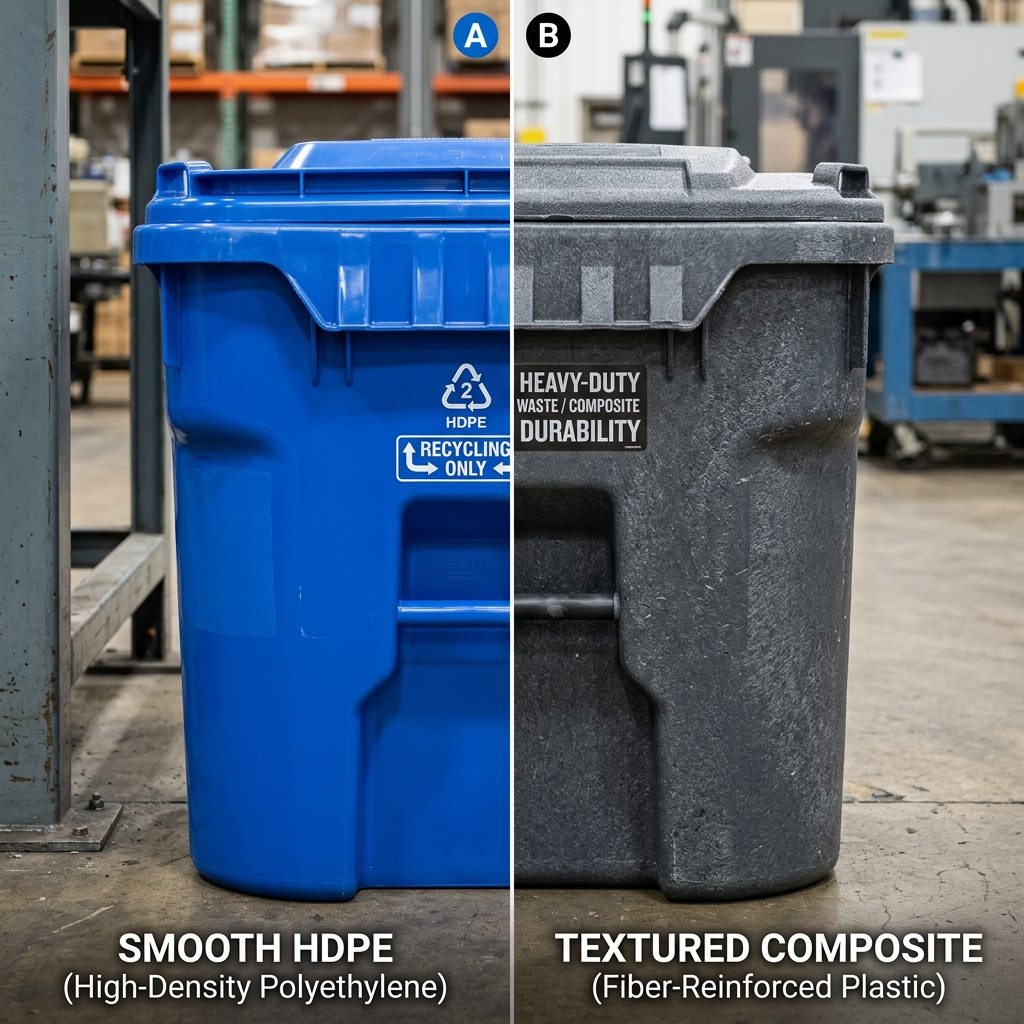
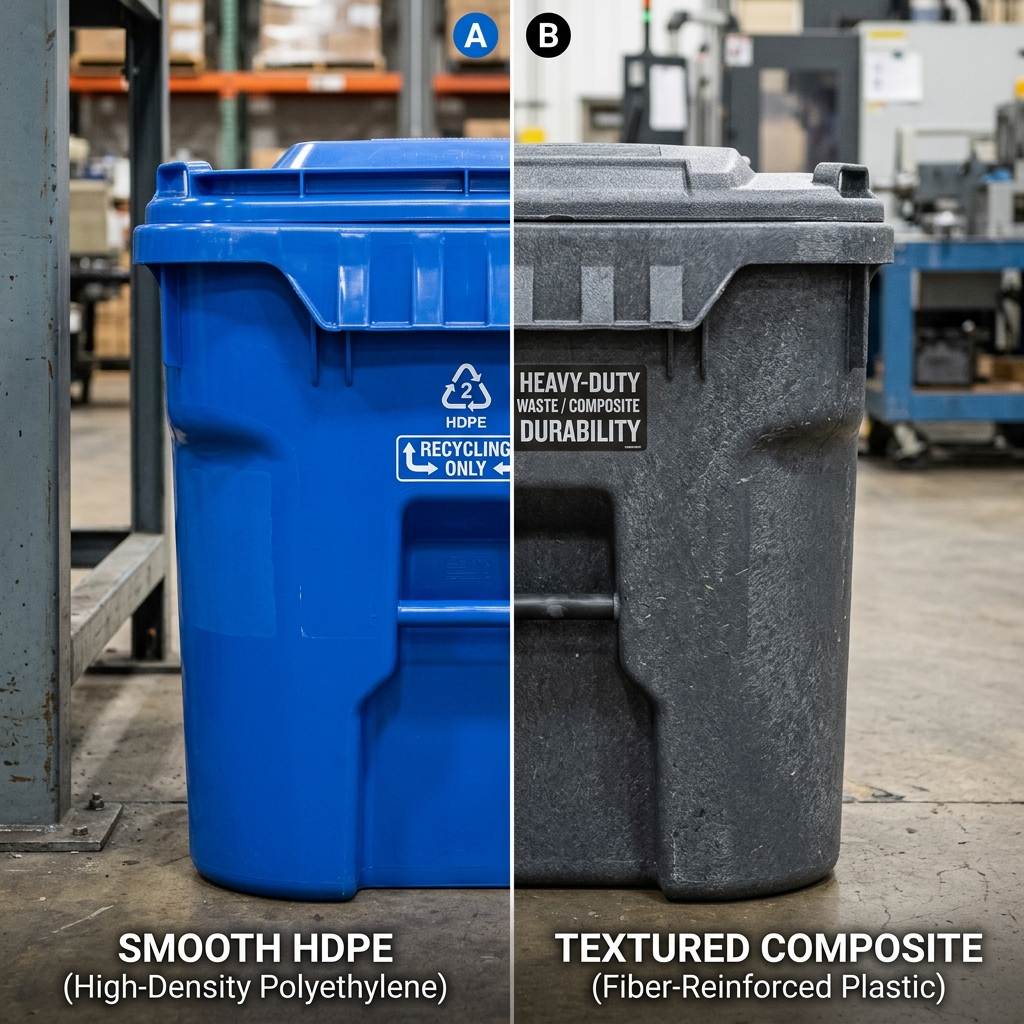
High-Density Polyethylene, commonly abbreviated as HDPE, is a thermoplastic polymer made from petroleum. It is known for its outstanding strength-to-density ratio, making it one of the most widely used plastics in the world. HDPE is the material used to make milk jugs, corrosion-resistant piping, and standard municipal wheelie bins. During manufacturing, HDPE is molded under high heat and pressure, resulting in a dense, non-porous structure. It is highly resistant to heavy impacts, chemical spills, and moisture absorption.
HDPE trash cans are typically colored throughout the material during extrusion, meaning scratches or scuffs do not reveal a different underlying color. Because of its flexibility and resilience, HDPE can flex under impact and return to its original shape without cracking, making it ideal for tough, everyday municipal use.
What is Composite Plastic?
Composite plastic, often referred to simply as composite material or wood-plastic composite (WPC), is an engineered material made by combining plastic resins with reinforcing fibers or fillers. Typically, composite plastic trash cans are composed of recycled plastics (such as polyethylene or PVC) mixed with organic wood fibers, sawdust, or mineral fillers. This mixture is extruded or compression-molded into planks or solid panels that mimic the texture, weight, and visual appearance of natural wood.
The main goal of composite plastic is to capture the warm, premium aesthetic of natural timber while eliminating wood’s vulnerability to rotting, splitting, insect damage, and moisture. Composite plastic bins are frequently structured with a metal or heavy plastic internal frame, surrounded by external composite slats or panels.
HDPE vs Composite Plastic: Detailed Comparison
1. Structural Strength and Impact Resistance
When it comes to raw impact resistance, HDPE holds a distinct advantage. Because it is a homogenous, flexible thermoplastic, it can absorb high-energy impacts—such as being dropped from a garbage truck mechanical arm or bumped by a vehicle—and simply bend or flex. It rarely cracks or shatters under pressure. Composite plastic, while highly rigid and strong, is more brittle due to the inclusion of wood fibers or mineral fillers. Under extreme impact, composite panels can crack or chip.
However, composite plastic bins are highly rigid and do not warp or bulge when filled with heavy waste, whereas large HDPE bins can warp slightly over time if subjected to constant heavy loads.
2. Weather Resistance and Environmental Durability
Both materials are designed for outdoor exposure, but they react differently to weather extremes. HDPE is completely waterproof and impervious to rot, mold, and insects. Modern outdoor HDPE bins are treated with UV stabilizers that prevent fading and cracking under solar radiation. Composite plastic is also highly weather-resistant compared to raw wood. However, because it contains wood fibers, it can absorb tiny amounts of moisture over time. In poorly manufactured composite bins, this can lead to mild swelling or localized mildew in humid environments.
In contrast, HDPE remains completely unaffected by moisture or sub-zero temperatures.
3. Aesthetic Appeal and Styling Options
Aesthetic appeal is where composite plastic excels. HDPE trash cans are functional and industrial in appearance. They are usually molded into solid, smooth-walled shapes in standard utility colors like green, blue, yellow, and black. While practical, they do not blend well with high-end landscaping or upscale architectural designs. Composite plastic, on the other hand, is specifically engineered to look like premium wood or stone. It offers a warm, natural wood grain texture and is available in earthy tones like teak, redwood, and charcoal.
This makes composite bins the preferred choice for resorts, luxury villas, golf courses, and landscaped municipal parks where visual integration is a priority.
4. Sustainability and Environmental Impact
Environmental considerations are increasingly important for modern waste management decisions. HDPE is highly recyclable, classified under recycling code #2. Most HDPE trash cans can be fully recycled at the end of their lifespan to make new bins or plastic lumber. Many manufacturers also use post-consumer recycled HDPE to build new bins. Composite plastic is often made from recycled materials, which is excellent for waste diversion.
However, because it is a mixture of plastic and organic fibers (wood/sawdust), it is extremely difficult to recycle once the product reaches the end of its life. The blended materials cannot easily be separated, meaning most decommissioned composite bins end up in landfills.
5. Lifecycle Value and Total Cost of Ownership
From a cost perspective, HDPE bins typically have a lower initial purchase price due to efficient mass-production molding processes. Their durability and low maintenance requirements translate to an excellent return on investment, lasting for decades with basic cleaning. Composite plastic trash cans represent a premium option, carrying a higher initial purchase price due to the multi-step assembly of planks, metal frames, and hardware.
However, compared to natural wood bins which require annual sanding, staining, and sealing, composite plastic bins require virtually no maintenance, making them far cheaper than wood over a ten-year lifecycle.
Conclusion
Choosing between HDPE vs composite plastic trash cans ultimately depends on your project’s specific priorities. If your primary goals are maximum durability, impact resistance, recyclability, and low upfront costs for municipal or industrial settings, HDPE is the clear winner. However, if you are designing a high-end resort, a public park, or a commercial plaza where aesthetics, natural textures, and blending with the environment are paramount, composite plastic is the superior investment.
Frequently Asked Questions
Is HDPE plastic safe for the environment?
Yes, HDPE is considered one of the most environmentally friendly plastics because it is highly recyclable, non-toxic, and does not leach chemicals into the soil or water. It can be recycled repeatedly to create new long-lasting products.
Do composite plastic trash cans rot like real wood?
No, composite plastic trash cans do not rot, splinter, or peel. Because the wood fibers are encapsulated in plastic resins, the material is protected against moisture, decay, and wood-boring insects, requiring no painting or staining.
Which material is better for coastal areas with salty air?
Both HDPE and composite plastic perform exceptionally well in coastal areas because they do not rust. However, ensure that any metal frames, hinges, or screws on a composite bin are made from high-grade stainless steel to resist salt-air corrosion.
Related Reading: Explore our detailed guide on 7 Reasons It's the Best Choice to learn more about choosing the best waste solutions for your needs.
To understand the global impact of proper recycling and garbage disposal, check out the comprehensive resource on Waste Management on Wikipedia.
