
B2B Solutions, Post, Waste Management
Industrial Waste Bins: 5 Solutions for Factory Management
Jun
Introduction
n
If you are looking for the best information on industrial waste bins, you have come to the right place. Manufacturing plants, assembly factories, and industrial facilities are hubs of high-volume productivity. Along with the goods they produce, these sites generate significant amounts of waste. From metal shavings, chemical residues, and packaging materials to heavy shipping pallets and organic process waste, the volume and variety of refuse are substantial. In such demanding environments, standard residential or light-commercial trash cans are entirely inadequate.
Factories require heavy-duty industrial waste bins that are specifically engineered to withstand harsh conditions, ensure workplace safety, and streamline waste logistics.
Selecting the appropriate industrial bins is a foundational step in establishing a safe, compliant, and efficient manufacturing facility.
nn
The Challenges of Factory Waste Management
n
Industrial waste management is far more complex than residential garbage collection. Factories face unique challenges that demand specialized solutions. First and foremost is the shear volume of waste. Industrial processes operate continuously, and a bottleneck in waste disposal can halt production lines, leading to costly downtime. Secondly, the physical nature of industrial waste is often hazardous, heavy, abrasive, or sharp. Metal shards, wood splinters, and chemical containers can easily puncture standard bins, creating safety hazards for workers.
Finally, factories must adhere to strict environmental regulations regarding the separation and disposal of hazardous and non-hazardous materials. Failure to comply can result in severe fines, legal liabilities, and damage to the company’s reputation.
nn
The Role of Waste Management in Workplace Morale
n
While safety and compliance are the primary drivers of factory waste policies, employee morale is another critical factor. A clean, organized factory floor shows workers that management cares about their working environment. On the other hand, a cluttered space with overflowing trash cans and oil-slicked floors feels chaotic and neglected, which can lead to low employee engagement and high turnover rates. Providing enough heavy-duty waste bins and keeping the shop floor clean fosters a sense of pride and professionalism among the workforce, which directly impacts overall productivity.
nn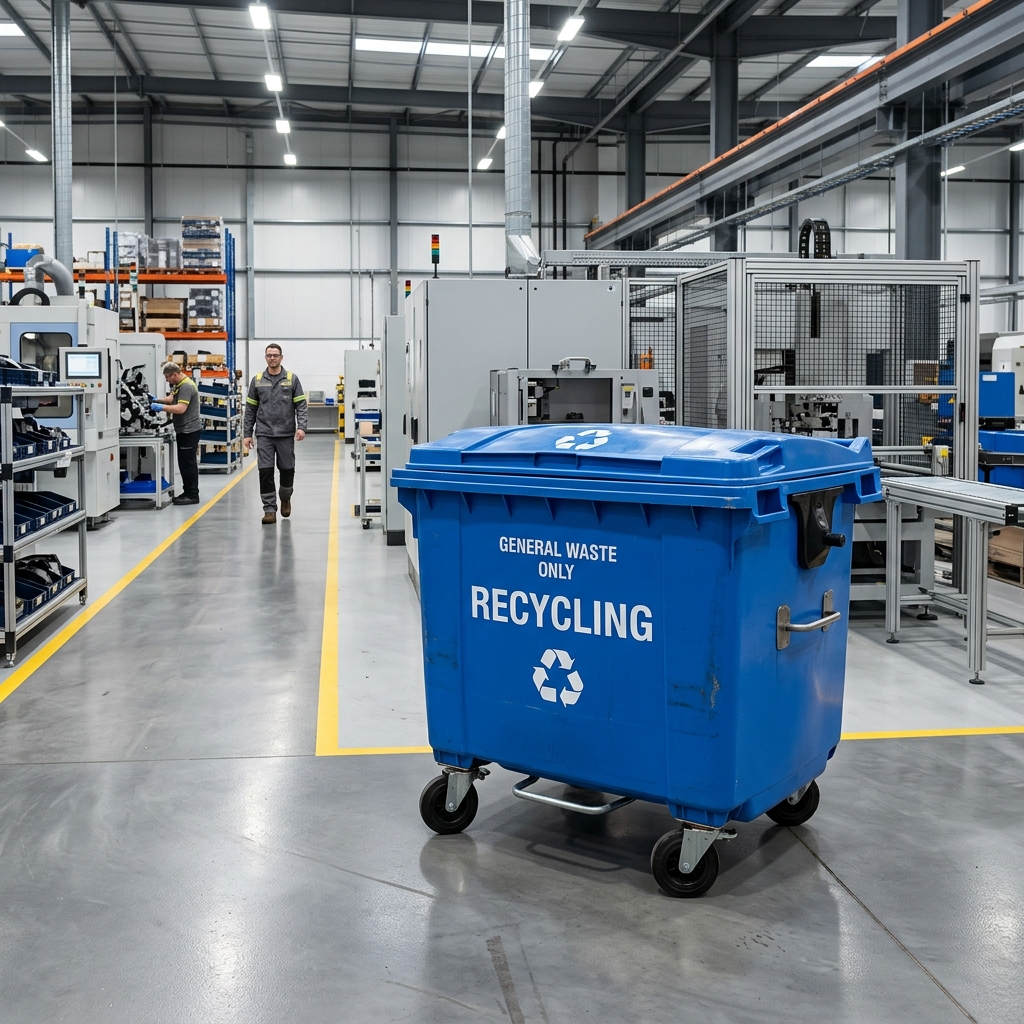 nn
nn
Key Characteristics of Heavy-Duty Industrial Waste Bins
n
To perform reliably in industrial settings, waste bins must be built to different standards than household containers. When evaluating industrial waste bins for your facility, several critical characteristics should be prioritized:
n
- n
- High-Impact Durability: Industrial bins must withstand impact from heavy machinery, forklifts, and rough handling. They are typically manufactured from high-density polyethylene (HDPE) using rotational molding, which ensures seamless strength, or from heavy-gauge galvanized steel. Rotational molding is a manufacturing process that creates extremely strong, stress-free corners and thick outer walls, which are critical for preventing cracks when the bin is dropped or bumped by heavy industrial machinery.
- Chemical and UV Resistance: Bins used in factories are often exposed to corrosive substances, cleaning agents, and oils. Additionally, bins stored outdoors must resist degradation from ultraviolet (UV) radiation. Materials like HDPE offer excellent chemical resistance and UV stabilization.
- Mobility and Maneuverability: Large waste containers can weigh hundreds of pounds when full. They must be equipped with heavy-duty, industrial-grade casters that can glide over uneven factory floors. Ergonomic handles and towable hitches are also essential for transporting bins across large facilities.
- Forklift and Hoist Compatibility: Many industrial processes require automated emptying. Heavy-duty bins should feature built-in forklift pockets, lifting trunnions, or compatibility with automated tippers to eliminate manual lifting and reduce the risk of worker injury.
- Reinforced Rims and Stress Points: The areas of the bin that experience the most stress during dumping and lifting must be reinforced. Double-walled rims, ribbed corners, and heavy-duty hinges ensure the bin does not deform or crack under pressure.
n
n
n
n
n
nn
Types of Industrial Waste Bins and Their Specific Applications
n
Different areas of a factory generate different types of waste, requiring a variety of bin designs. A comprehensive industrial waste management plan will utilize several types of bins:
n
1. Wheeled Dumpsters and Mobile Bins
n
These are the workhorses of the factory floor. Ranging in capacity from 240 liters to over 1000 liters, wheeled mobile bins are used to collect general waste from individual workstations and transport it to central consolidation points. Their wheels allow workers to move them easily, and their tight-fitting lids contain dust, odors, and pests.
n
2. Tilt Trucks
n
Tilt trucks are specialized, low-profile bins designed for transporting and dumping heavy loads of waste, recycling, or raw materials. They feature a balanced design that allows a single operator to tilt and empty the bin controlledly. Tilt trucks are ideal for handling heavy, compact materials like metal stampings, sawdust, or plastic scrap.
n
3. Color-Coded Recycling Stations
n
To comply with environmental regulations and support sustainability initiatives, factories must separate recyclables. Color-coded bins (e.g., blue for paper/cardboard, yellow for plastics, red for hazardous materials) help workers quickly and correctly sort waste at the source. Clear labels and restricted lid openings further prevent contamination of recyclable streams.
n
4. Self-Dumping Hoppers
n
Self-dumping hoppers are heavy-steel bins mounted on forklift forks. Once positioned over a large dumpster or waste truck, the operator releases a safety latch, allowing the hopper to tilt forward, dump its contents, and automatically return to an upright, locked position. This is the safest and most efficient method for handling heavy metal scrap and construction debris.
nn
Regulatory Compliance and Safety Standards
n
Using the correct industrial waste bins is essential for meeting regulatory requirements. In the United States, the Occupational Safety and Health Administration (OSHA) and the Environmental Protection Agency (EPA) enforce strict rules regarding waste disposal. For example, flammable waste must be stored in self-closing metal containers to prevent fire hazards. Hazardous materials must be kept in certified, leak-proof containment bins with proper labeling. By investing in specialized, compliant industrial waste bins, factory managers ensure a safer working environment, protect workers from exposure to harmful materials, and avoid expensive non-compliance penalties.
nn
Best Practices for Factory Waste Management
n
Acquiring heavy-duty bins is only half the battle; implementing an organized system is key to success. Consider these best practices:
n
- n
- Optimize Bin Placement: Place bins close to the source of waste generation to minimize the distance workers must travel. However, ensure they do not block emergency exits, fire extinguishers, or pedestrian walkways.
- Implement a Color-Coding System: Standardize color schemes across the entire facility and train all employees on the correct disposal protocols. Use large, visual icons on bins to overcome language barriers.
- Schedule Regular Pickups: Prevent bins from overflowing by establishing a regular emptying schedule based on production volume. Overflowing bins create slipping hazards and attract pests.
- Perform Routine Maintenance: Inspect Bins regularly for cracks, broken wheels, or faulty lids. Damaged bins should be repaired or replaced immediately to prevent accidents and keep the facility operating smoothly.
n
n
n
n
nn
Conclusion
n
Heavy-duty industrial waste bins are vital components of any successful factory infrastructure. They protect workers from occupational hazards, facilitate regulatory compliance, and prevent operational bottlenecks. By selecting the right combination of wheeled bins, tilt trucks, and self-dumping hoppers, and maintaining them properly, industrial facilities can maintain a clean, organized, and highly productive manufacturing environment that keeps production moving forward.
Related Reading: Explore our detailed guide on 5 Easy Steps to Disinfect to learn more about choosing the best waste solutions for your needs.
To understand the global impact of proper recycling and garbage disposal, check out the comprehensive resource on Waste Management on Wikipedia.
