
Healthcare, Post, Waste Management
Medical Waste Bins: 5 Critical Color Coding Rules
Jun
If you are looking for the best information on medical waste bins, you have come to the right place. In healthcare environments, waste management is not simply a matter of cleanliness; it is a critical component of infection control, environmental safety, and regulatory compliance. Hospitals, dental clinics, medical laboratories, and veterinary offices generate a wide variety of waste products daily. These materials range from standard office paper and food scraps to highly infectious biological materials, chemical reagents, and sharp surgical instruments.
If these waste streams are mixed, the consequences can be catastrophic, leading to accidental needle stick injuries, the spread of nosocomial infections, and environmental contamination.
To prevent these hazards, healthcare facilities rely on strict segregation protocols supported by standardized medical waste bins. The foundation of this segregation is a universal color-coding system. This article explains the essential color-coding rules for medical waste bins, outlines international hospital standards, and detail the features required for medical-grade waste containers.
Why Medical Waste Segregation is Vital
The primary objective of using dedicated medical waste bins is to separate hazardous clinical waste from non-hazardous general waste immediately at the point of generation. According to the World Health Organization (WHO), approximately 85% of waste generated by healthcare activities is non-hazardous, similar to domestic waste. The remaining 15% is classified as hazardous material that can be infectious, toxic, or radioactive. When healthcare staff fail to segregate waste, the entire mixture becomes hazardous clinical waste.
This dramatically increases the volume of waste that requires specialized treatment (such as incineration or autoclaving), raising waste disposal costs for hospitals. More importantly, proper segregation ensures that waste handlers, sanitation staff, and the community are protected from exposure to dangerous pathogens and chemical agents.
Standard Color Coding Rules for Medical Waste Bins
1. Yellow Bins: Clinical and Infectious Waste
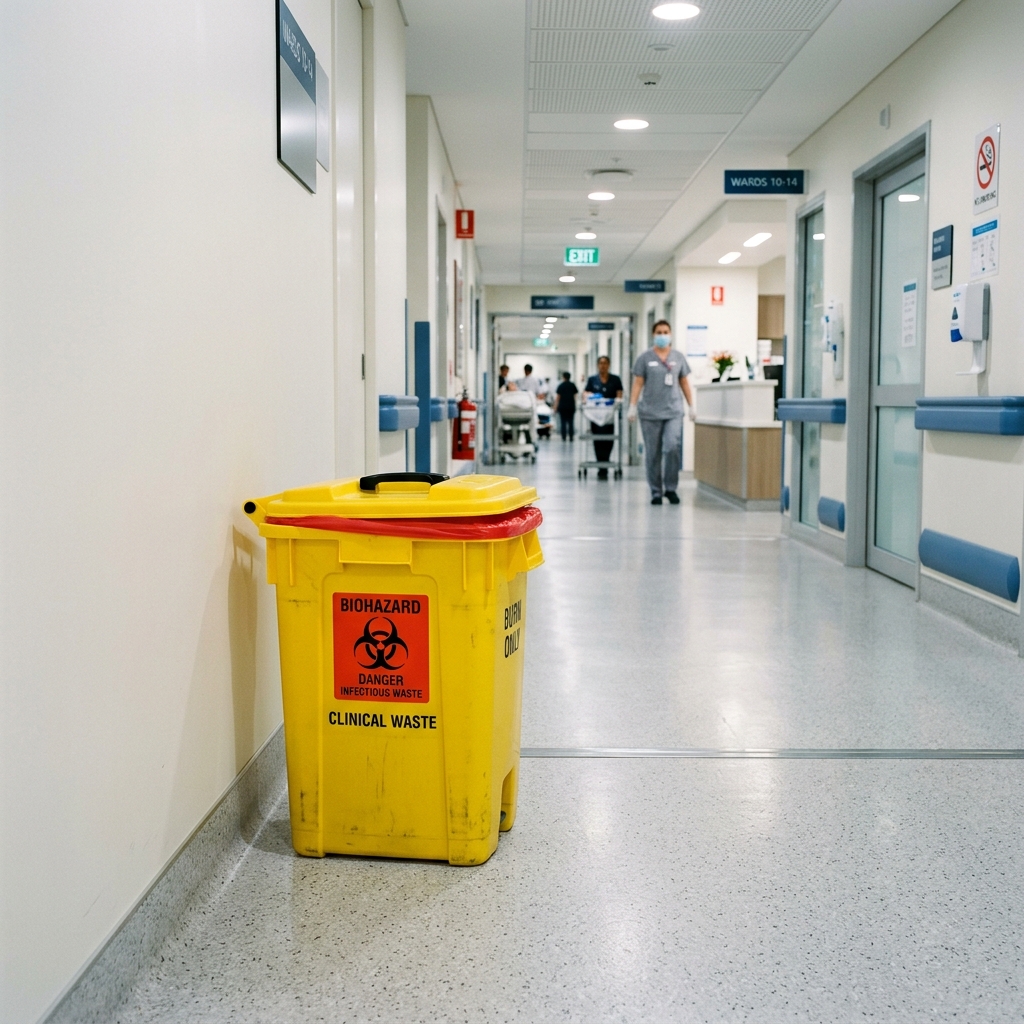
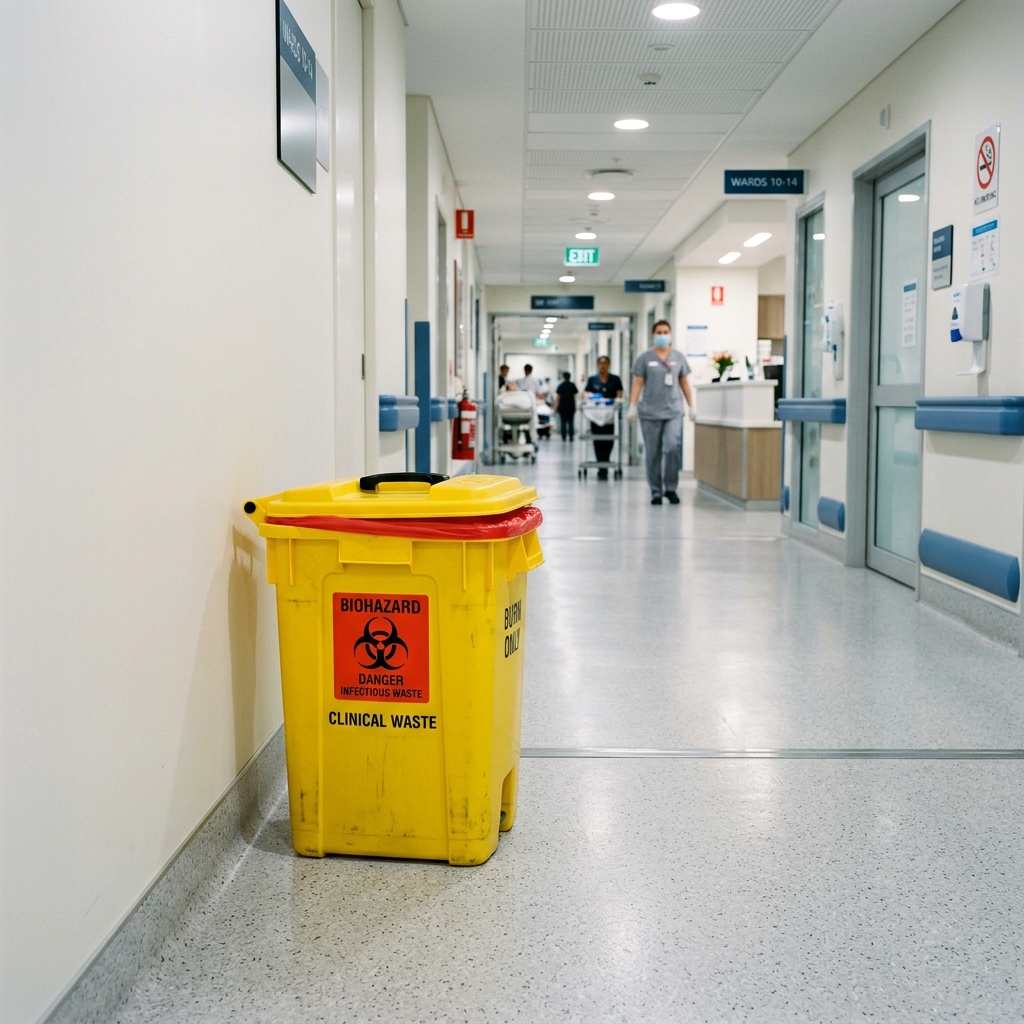
Yellow is the most critical color in the medical waste management hierarchy, designating clinical and infectious waste. Yellow medical waste bins are reserved for items that have been contaminated with blood, body fluids, or other infectious materials. This includes used bandages, dressings, cotton swabs, gloves, disposable gowns, plastic tubing, and syringes without needles. It also includes waste from patients in infectious isolation wards. Because this waste contains pathogens that can spread disease, it must undergo high-temperature incineration or steam sterilization (autoclaving) at specialized facilities.
Yellow bins are usually lined with thick, yellow biohazard bags marked with the universal biohazard symbol.
2. Red Bins: Anatomical and Biohazardous Waste
Red bins are designated for anatomical waste and highly biohazardous materials. Anatomical waste includes human tissues, organs, body parts, placentas, and blood bags used in surgical procedures or laboratory testing. This category also includes animal carcasses and tissues from research laboratories. Due to the biological nature of anatomical waste, red bins are tightly controlled and require immediate, specialized refrigeration before being transported for deep burial or high-temperature incineration.
Red bins must be constructed from heavy-duty, leak-proof polymers that prevent fluid leakage and must never be used for general garbage or chemical waste.
3. Blue or White Bins: Glassware and Sharps Waste
Sharps and glassware represent a severe physical hazard to medical staff and waste handlers. Blue or white medical waste bins (often designated as sharps containers) are reserved for disposing of needles, syringes with attached needles, scalpels, lancets, broken glass vials, and glass slides. Unlike soft-sided bins, blue or white sharps containers are built from rigid, high-impact, puncture-resistant plastic. They feature specialized entry ports that allow needles to be dropped in without the user touching the opening, and a permanent locking lid that prevents the container from being reopened once full.
This prevents accidental needle sticks, which can transmit bloodborne pathogens like HIV and Hepatitis B.
4. Black or Brown Bins: General and Chemical Waste
Black or brown bins are reserved for non-hazardous general waste and pharmaceutical waste. Black bins are used for office paper, cardboard, packaging, food scraps, and plastic water bottles—waste that does not pose an infectious risk and can be disposed of in standard landfills or municipal recycling programs. Brown bins are typically used to dispose of expired, unused, or contaminated pharmaceuticals, chemical reagents, and heavy metal waste (such as thermometers containing mercury). Separating these materials prevents toxic chemicals from entering municipal sewer systems or landfills, protecting local water supplies.
Standards for Hospital-Grade Medical Waste Bins
To comply with healthcare regulations, medical waste bins must meet specific design and safety standards. First, they must feature hands-free operation. Bins in clinical areas should be operated by foot pedals or motion sensors to prevent doctors and nurses from touching the bin with contaminated gloves. Second, the materials must be non-porous, corrosion-resistant, and easy to sanitize. Medical-grade plastics like polypropylene are preferred because they can withstand harsh chemical disinfectants without degrading. Third, bins must be leak-proof and airtight.
The lids must fit tightly to prevent odors from escaping and to block pests. Finally, all bins must be clearly labeled. They must feature the international biohazard symbol, clear text indicating the waste category, and instructions for proper disposal to minimize errors by staff and patients.
Conclusion
Color-coded medical waste bins are a simple yet powerful tool for maintaining safety in healthcare facilities. By establishing a clear visual separation between infectious waste, anatomical specimens, sharps, and general garbage, hospitals can protect their staff, minimize disposal costs, and comply with environmental laws. Understanding and enforcing these color-coding rules is a vital responsibility for every medical professional and facility administrator.
Frequently Asked Questions
What is the universal symbol on yellow medical waste bins?
Yellow bins feature the universal biohazard symbol, which consists of three overlapping circles. This symbol is recognized internationally and warns staff and waste handlers that the container contains potentially infectious biological agents.
Can household waste be placed in clinical yellow bins?
No, household waste, food packaging, and clean office paper should never be placed in yellow clinical bins. Doing so unnecessarily increases the volume of hazardous waste that must be incinerated, significantly raising the hospital’s waste management costs.
Are sharps containers reusable?
No, standard sharps containers are single-use disposable units. Once the sharps waste reaches the fill line (usually 3/4 full), the lid is permanently locked, and the entire container is incinerated or autoclaved to destroy the needles and pathogens safely.
Related Reading: Explore our detailed guide on 5 Luxury Options for Hotel Lobbies to learn more about choosing the best waste solutions for your needs.
To understand the global impact of proper recycling and garbage disposal, check out the comprehensive resource on Waste Management on Wikipedia.
